Factory vs Trading Company in China: Which Should You Buy From?
Compare Chinese factories and trading companies on MOQ, cost, quality and verification. Includes 300-unit and 1,000-unit examples, a scorecard and RFQ template.
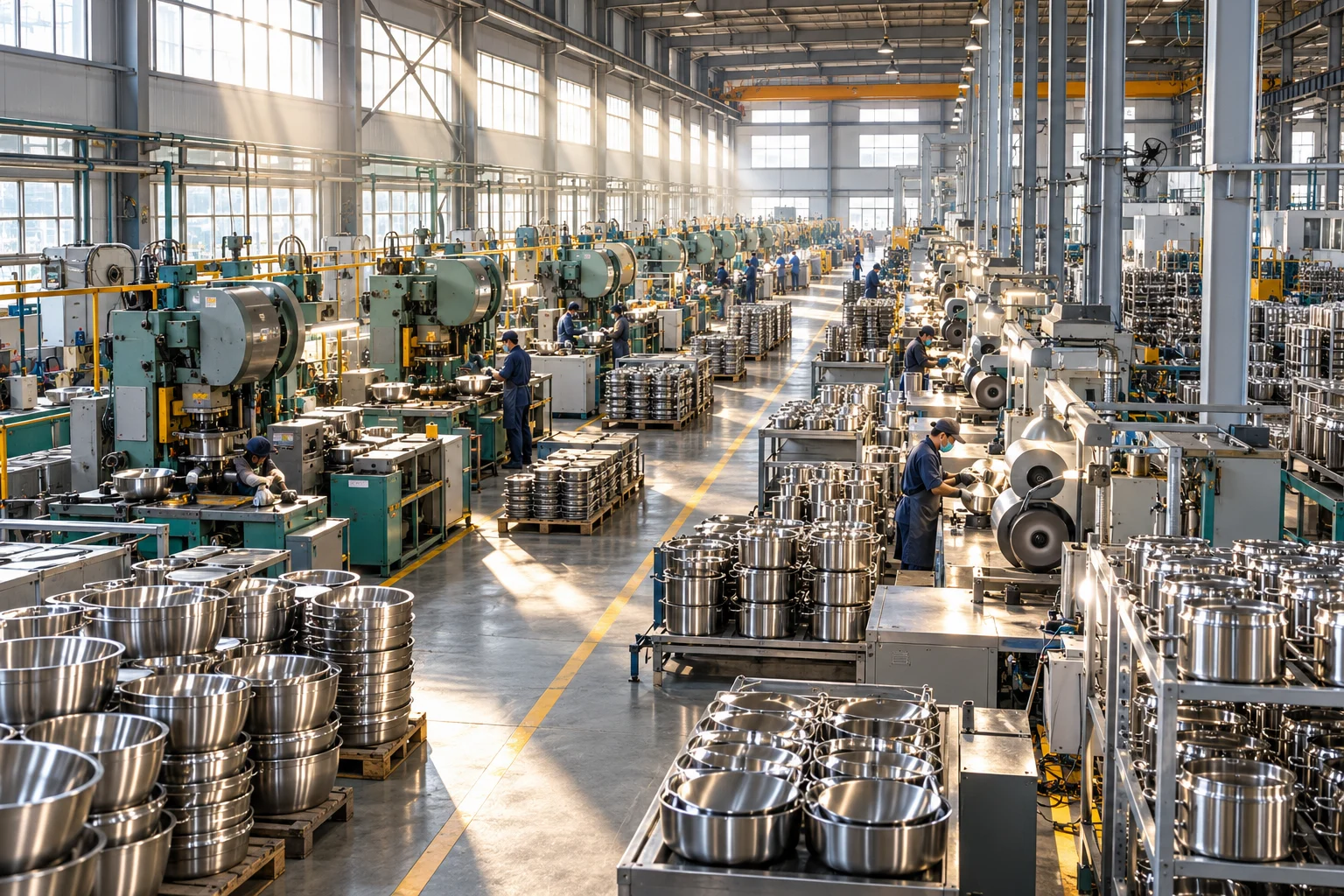
Updated October 2026 | HMZ Global — China Sourcing & Procurement
Buying directly from a Chinese factory is not always cheaper, and buying through a trading company is not automatically a bad decision.
Factories generally provide closer access to manufacturing operations, technical expertise and customization. Trading companies may offer smaller minimum orders, easier communication, product consolidation and export services.
The right choice depends on what you are buying, how much you need, what manufacturing control is required and the total cost of getting the products delivered.
This guide compares both supplier types, explains how to verify who actually makes your products, and uses real-world purchasing scenarios with illustrative calculations to help you make a better sourcing decision.
1. Factory vs Trading Company: Quick Comparison
A manufacturer or factory physically produces goods using its own or operated production facilities.
A trading company typically purchases goods from one or more manufacturers and resells them to customers, often handling sales, coordination and export arrangements.
Neither business model guarantees better prices or quality.
| Factor | Factory / Manufacturer | Trading Company |
|---|---|---|
| Core activity | Manufactures products | Sources and resells products |
| Unit pricing | Often competitive at scale | May include a resale margin |
| Minimum order quantity | Often higher | May offer smaller orders |
| Product variety | Usually specialized | Often broader |
| Customization | Potentially direct technical access | Depends on factory relationships |
| Production visibility | Usually easier to arrange | May require cooperation from upstream factory |
| Quality control | Can control its own production | Must manage upstream manufacturers |
| English communication | Varies | Often export-focused |
| Export documentation | Depends on capabilities | Often a core service |
| Multi-supplier consolidation | Usually limited | Can be a major advantage |
| Best suited for | Repeat orders, technical products, volume | Small orders, mixed products, simpler procurement |
These are common operating patterns, not universal rules.
A highly capable trading company may outperform a poorly managed factory on cost, quality and delivery.
2. Four Types of Chinese Suppliers You May Encounter
The distinction between manufacturer and trading company is more complicated than two labels suggest.
Type 1: Direct Manufacturer
A manufacturer produces the relevant goods at a facility it owns or operates.
For example, a factory specializing in stainless-steel kitchenware may operate cutting, forming, polishing and assembly equipment.
Buying directly can allow closer discussion of technical specifications, manufacturing processes, materials and production scheduling.
However, some manufacturing processes may still be subcontracted.
A factory should not be assumed to manufacture every component or perform every production step internally.
Type 2: Independent Trading Company
A trading company buys products from one or more factories and sells them to international customers.
It may handle:
- Supplier selection
- Product quotations
- Order coordination
- Packaging arrangements
- Quality inspections
- Export documentation
- Shipment consolidation
A good trading company creates commercial value through these services.
The problem arises when a trading company claims to manufacture products itself while concealing the actual production arrangement.
Type 3: Manufacturer With a Separate Export Company
Some genuine manufacturers sell internationally through a related or authorized exporting entity.
For example, one company may operate the production facility while another company issues the invoice and receives international payments.
This arrangement can be legitimate.
Buyers should verify the relationship, payment authorization and contractual responsibilities of both companies. If the receiving account changes, use our supplier bank-detail verification checklist before sending payment.
Type 4: Hybrid Manufacturer and Trader
Some Chinese companies manufacture certain product categories while purchasing others from partner factories.
A supplier may genuinely produce plastic containers but source metal accessories, packaging and electronics from other manufacturers.
This means the supplier's business model can differ from one product to another.
Ask who manufactures your exact product, not simply whether the supplier calls itself a factory.
3. Are Chinese Factories Always Cheaper?
No.
Buying directly from a manufacturer can eliminate a resale margin, but that does not guarantee a lower total purchasing cost.
A factory may require a higher MOQ, charge separately for export arrangements or prioritize larger customers.
A trading company may obtain competitive factory pricing through established purchasing relationships, consolidated orders or existing inventory.
Example
A manufacturer quotes:
$3.60 per unit — minimum order 1,000 units.
A trading company quotes:
$4.15 per unit — minimum order 100 units.
The factory's unit price is lower.
But if you need only 300 units, the factory requires you to buy 700 additional units.
That changes the economics.
For small test orders, inventory exposure and cash flow can matter more than the quoted unit-price difference.
For recurring large orders, factory-direct pricing may become significantly more attractive.
The correct comparison is therefore based on your actual purchasing requirement. When comparing marketplace offers, use our 1688 vs Alibaba total-cost example to account for payment, handling and logistics costs beyond the unit price.
4. Original Cost Comparison: 300 Units vs 1,000 Units
Consider a hypothetical importer sourcing a non-regulated consumer product.
Two suppliers offer identical specifications, packaging and quality requirements.
The following figures are illustrative assumptions, not actual market quotations.
Scenario A: You Need Only 300 Units
The trading company accepts the order.
The factory requires its 1,000-unit MOQ.
| Cost component | Factory | Trading company |
|---|---|---|
| Units purchased | 1,000 | 300 |
| Unit price | $3.60 | $4.15 |
| Product expenditure | $3,600 | $1,245 |
| Export preparation | $200 | Included |
| Quality inspection | $150 | $150 |
| International freight | $500 | $220 |
| Total cash required | $4,450 | $1,615 |
The factory provides more inventory at a lower purchasing cost per unit, but requires an additional $2,835 in immediate cash expenditure.
If you are testing demand for a new product, the trading company may be more suitable.
You avoid purchasing 700 units that you do not yet know you can sell.
However, those 700 extra units are not necessarily wasted. They remain inventory with potential future value.
The key question is whether the expected future sales justify the additional capital, storage and inventory risks.
Scenario B: You Need 1,000 Units
Now assume both suppliers quote the same quantity.
| Cost component | Factory | Trading company |
|---|---|---|
| Quantity | 1,000 | 1,000 |
| Unit price | $3.60 | $4.15 |
| Product expenditure | $3,600 | $4,150 |
| Export preparation | $200 | Included |
| Quality inspection | $150 | $150 |
| International freight | $500 | $500 |
| Total estimated cost | $4,450 | $4,800 |
| Cost per unit | $4.45 | $4.80 |
At this quantity, the manufacturer saves $350, or approximately 7.3% of the trading company's modeled total.
The saving arises because the lower unit price outweighs the factory's additional fixed export charge.
These comparisons exclude destination customs duties, taxes, domestic delivery, storage, testing and other potentially applicable expenses. They are sourcing-and-freight estimates, not complete landed costs. All quotes must be normalized to the same shipment scope and actual contractual terms.
The Business Lesson
For 300 units, the trading company may preserve capital and reduce unsold inventory exposure.
For 1,000 units, the manufacturer becomes cheaper under these assumptions.
Neither supplier is inherently superior.
The best supplier changes with the order quantity and purchasing requirements.

5. Minimum Order Quantity: A Major Difference
MOQ stands for minimum order quantity—the smallest quantity a supplier is willing to sell under specified terms.
Factories may establish MOQs based on production setup, material purchasing, packaging requirements or economic batch sizes.
Trading companies may offer smaller quantities when they hold inventory or can arrange smaller purchases from suppliers.
However, traders cannot always overcome factory minimums, especially for heavily customized products.
How to Negotiate a Lower MOQ
Instead of simply requesting a discount, ask:
- Can we use existing stock materials?
- Is there an available standard color or packaging option?
- Can the first order be treated as a paid trial batch?
- Can we combine several variants to reach the MOQ?
- Can we pay a reasonable setup fee for a smaller production run?
- Can a smaller order be accepted at a higher unit price?
For test orders, reducing the required commitment may be more valuable than negotiating a small unit-price reduction.
6. Quality Control: Does Buying Directly From a Factory Mean Better Quality?
Not necessarily.
A manufacturer may have direct control over production, but the effectiveness of its quality management depends on its equipment, workforce, processes and inspection systems.
A trading company may have strong supplier qualification procedures and independent inspection arrangements.
The relevant question is who controls quality requirements and who is accountable when a shipment fails inspection.
Before Production
Confirm product specifications, approved materials, dimensions, tolerances, labeling and functional requirements.
During Production
Establish whether the supplier can provide evidence of material checks, process inspections and corrective actions.
Before Shipment
Use an appropriate inspection plan to evaluate the finished products against agreed requirements.
Inspection acceptance criteria should be established before production, particularly for defects affecting safety, functionality or commercial acceptability.
Certificates Are Not a Substitute for Product Testing
An ISO 9001 certificate concerns a quality management system. It does not certify that every product manufactured by the organization meets its required standards.
Verify the certificate's issuing body, holder, scope, status and relevant facilities.
For regulated goods, confirm the product-specific testing, approvals and documentation required in the destination market.
A factory with an attractive certificate but unreliable production may present more risk than a trader that systematically verifies its upstream suppliers.
7. Customization: Factory or Trading Company?
If your business requires significant product customization, direct manufacturing access can be valuable.
Consider a company developing a private-label kitchen appliance.
The project may involve:
- Material changes
- Mold design
- Electrical components
- Product dimensions
- Packaging engineering
- Branding
- Performance testing
- Regulatory compliance
A manufacturer with the relevant engineering capabilities can often discuss these requirements directly.
A trading company may also coordinate customization, but you should establish which factory performs the work and who controls the technical decisions.
For highly technical products, delays and misunderstandings between the buyer, trader and manufacturer can be costly.
For straightforward logo printing or standard packaging changes, an experienced trading company may handle customization effectively.
Intellectual Property Considerations
For proprietary products, determine who receives drawings, CAD files, tooling designs and technical specifications.
Document tooling ownership, confidentiality obligations, intellectual-property rights and restrictions on unauthorized production or subcontracting.
Use appropriate enforceable agreements based on the relevant jurisdictions and commercial relationships.
Do not assume buying directly from a factory automatically protects intellectual property.
8. How to Tell Whether a Chinese Supplier Is a Real Manufacturer
Supplier verification should combine documentary, operational and independent evidence.
No single document, marketplace badge or photograph conclusively proves that a company manufactures your exact product.
Step 1: Obtain the Registered Company Details
Request the supplier's business license, full legal company name and Unified Social Credit Code.
For mainland Chinese companies, use the official National Enterprise Credit Information Publicity System:
Check available information about registration status, legal identity, registered address and business activities.
The system's accessibility may vary from outside China.
Important: A registered manufacturing business scope shows what the company is authorized to conduct; it does not prove that it currently operates a particular factory or manufactures the quoted SKU.
Step 2: Identify the Actual Production Location
Ask for the physical address where your specific product is manufactured.
The registered corporate office and production facility may have different addresses.
A difference is not automatically suspicious, but the relationship should be explained.
Step 3: Request Relevant Production Evidence
Ask for evidence that relates directly to your product category.
Useful information includes:
- Production line descriptions
- Machinery and equipment
- Manufacturing process flow
- Monthly production capacity
- Internal quality-control procedures
- Current facility photos or videos
- Relevant audit reports
A broad company presentation covering dozens of unrelated industries is not strong evidence of manufacturing capabilities.
Step 4: Ask Technical Questions
Ask questions that require knowledge of the actual manufacturing process.
For example:
- Which production stages are performed in-house?
- Which components or processes are subcontracted?
- What tolerances can the production line consistently achieve?
- Which material specifications are available?
- How are critical defects detected?
- What causes the longest production delays?
A salesperson might need to consult an engineer. That is normal.
What matters is whether the supplier can provide consistent, specific and verifiable answers.
Step 5: Review Marketplace Assessment Reports
Alibaba.com's Verified Supplier program includes third-party on-site verification and assessment reports.
These reports can provide useful information about suppliers' facilities and capabilities.
However, a badge or assessment report should not be treated as a guarantee of the quality of your future order.
Review the report's date, assessed entity, facility address and scope.
Step 6: Verify Certifications
Check whether certificates and test reports correspond to the relevant company, facility, product and standard.
Where appropriate, confirm certificate status with the issuing certification body or recognized verification databases.
A certification issued to another company should not automatically be considered evidence of the supplier's capabilities.
Step 7: Arrange an Independent Factory Audit
For significant or technically demanding orders, an independent audit may be justified.
The auditor should verify the operating facility, relevant machinery, quality systems and production capabilities.
A good audit must be connected to your product category and intended manufacturing process.
Even a successful audit does not guarantee every subsequent order will meet specification. It provides evidence about the facility and operations assessed at a particular time.
9. Who Actually Controls Your Order?
One of the most important sourcing questions is often overlooked.
Who is legally and operationally responsible for each part of the transaction?
Use this responsibility matrix.
| Activity | Question to ask |
|---|---|
| Contract | Which legal entity signs the purchase agreement? |
| Manufacturing | Which facility makes the products? |
| Materials | Who approves raw materials and components? |
| Quality | Who controls inspection and corrective actions? |
| Subcontracting | Can the manufacturer change production sites? |
| Export | Which entity handles export documentation? |
| Invoice | Which company issues the commercial invoice? |
| Payment | Which entity receives the funds? |
| Warranty | Who handles defective goods and replacements? |
| Intellectual property | Who receives proprietary technical information? |
These details become especially important when the contracting company and actual manufacturer are different businesses.
Example: A Transparent Trading Company
A trading company openly identifies the manufacturing facility, organizes inspection, documents the applicable export arrangement and accepts contractual responsibility for the order.
That can be a legitimate and commercially efficient sourcing structure.
Example: A Poorly Controlled Direct Factory Order
A factory offers a low unit price but cannot demonstrate consistent quality checks, has unclear subcontracting arrangements and provides weak commercial documentation.
The factory label offers little protection in that situation.
The commercial objective is accountability, not merely eliminating intermediaries.
10. Warning Signs When Evaluating Chinese Suppliers
Pay attention to inconsistencies rather than treating one characteristic as proof of fraud.
| Warning sign | Why it matters | Recommended check |
|---|---|---|
| Supplier refuses to identify the actual manufacturer | Production responsibility is unclear | Request facility details and independent verification |
| Business documents conflict with supplier claims | Legal identity or activity may be misrepresented | Compare registration records |
| Different payment beneficiary without explanation | Payment authorization may be unclear | Independently verify before transferring |
| Supplier cannot answer technical questions | Manufacturing access or expertise may be limited | Request engineering clarification |
| Audit or inspection is refused without explanation | Production transparency may be insufficient | Investigate and consider alternatives |
| Certifications belong to an unrelated business | Evidence may not apply to the supplier or product | Verify holder and scope |
| Prices are unusually low without supporting explanation | Materials, specifications or quotation scope may differ | Request a fully itemized quotation |
Some genuine suppliers may have commercially valid reasons to protect customer lists or factory relationships.
A refusal to disclose certain information does not automatically prove dishonesty.
However, material gaps in manufacturing traceability, product compliance or contractual accountability must be resolved before proceeding.
11. Which Supplier Type Is Better for Your Business?
Small Importers Testing a New Product
Often better: Trading company
Lower MOQs, available inventory and simplified export arrangements may reduce the financial commitment required for an initial test.
Compare the extra unit cost with the potential expense of unsold inventory.
Amazon FBA Sellers
Best approach: Compare both
Consider product cost, approved packaging, labeling, testing, freight, inspection and fulfillment preparation.
A trading company with experience preparing the product for export can sometimes outperform a factory offering a slightly lower purchase price.
For repeat high-volume products, direct manufacturers may offer better unit economics.
Shopify and Private-Label Brands
Often better: Direct factory for substantial customization
If the product requires new molds, material changes or engineering work, closer technical communication may reduce delays and misunderstandings.
For simple branding of standard products, a trading company can still be suitable.
Wholesalers Buying Multiple Product Categories
Often better: Trading company or coordinated multi-factory sourcing
A company buying kitchenware, household accessories and promotional products may need several specialized manufacturers.
One intermediary can potentially combine communication, inspection and shipping arrangements.
Compare this service with managing each factory independently.
Established High-Volume Importers
Often better: Factory-direct sourcing, subject to verification
Larger purchasing volumes can justify factory minimums and create more opportunities to negotiate directly.
However, procurement staff must still manage production, quality, export coordination and commercial risk.
Industrial Equipment Buyers
Prioritize verified technical capability
For machinery and industrial components, production competence, testing, documentation, spare parts and after-sales support may be more important than a small price difference.
Direct factory access can be valuable, but specialized trading or engineering firms may also have legitimate technical and service capabilities.
12. Supplier Comparison Scorecard
Do not choose a supplier solely because it claims to be a factory.
Evaluate the following criteria using an evidence-based review.
| Criterion | Factory candidate | Trading company candidate |
|---|---|---|
| Legal identity verified | Yes / No | Yes / No |
| Actual manufacturer identified | Yes / No | Yes / No |
| Technical specifications confirmed | Yes / No | Yes / No |
| Samples approved | Yes / No | Yes / No |
| MOQ fits purchasing plan | Yes / No | Yes / No |
| Total delivered cost calculated | Yes / No | Yes / No |
| Inspection access confirmed | Yes / No | Yes / No |
| Applicable compliance documents verified | Yes / No | Yes / No |
| Export responsibilities documented | Yes / No | Yes / No |
| Payment beneficiary independently verified | Yes / No | Yes / No |
| Defect remedies agreed | Yes / No | Yes / No |
Not every requirement has equal importance.
Regulatory compliance, supplier identity and critical product safety requirements should be treated as essential conditions, not optional scoring points.
Among suppliers that satisfy those conditions, compare total cost, capacity and commercial suitability.
13. English RFQ Template: Find Out Who Actually Manufactures Your Product
Use this template when contacting suppliers on Alibaba, 1688 or through direct commercial inquiries.
Subject: Request for Quotation and Manufacturing Information — [Product Name]
Hello,
We are evaluating potential suppliers for an upcoming purchase.
Please provide your quotation and the following information.
Product requirements:
- Product name: [Product]
- Material and specifications: [Details]
- Order quantities: 300 / 500 / 1,000 units
- Destination country: [Country]
- Packaging requirements: [Details]
- Customization requirements: [If applicable]
Commercial information:
- Unit price for each order quantity
- Minimum order quantity
- Sample price and lead time
- Mass-production lead time
- Packaging details, carton dimensions and gross weight
- Available shipping terms, including named delivery location
- Payment terms
- Warranty and defective-product handling arrangements
Manufacturing verification:
- Are you the direct manufacturer, a trading company or a manufacturer with a separate export entity?
- Which company and facility will manufacture this specific product?
- Which production stages are performed in-house?
- Are any processes subcontracted?
- Can you provide relevant factory information, business-registration details and product certifications?
- Can an independent inspection be arranged before shipment?
We are looking for a reliable supplier capable of maintaining consistent quality and supporting repeat orders.
Please include any additional information that would help us compare your quotation with other suppliers.
Best regards,
[Your Name / Company]
14. Frequently Asked Questions
Are factories always cheaper than trading companies in China?
No. Factories may have lower unit prices, but higher MOQs, export charges and additional coordination costs can make a trading company more economical for some orders.
How can I know if an Alibaba supplier is a manufacturer?
Review company-registration details, verified assessment reports, production-site evidence, technical capabilities and relevant audit information.
Do not rely on the supplier's profile description alone.
Is buying from a Chinese trading company safe?
It can be. Verify the legal entity, manufacturing arrangements, contractual responsibilities, payment beneficiary and quality-control procedures.
Trading companies are legitimate businesses, but their capabilities vary.
Why do Chinese factories have high MOQs?
Some factories need minimum production quantities to cover setup costs, material procurement and efficient production runs.
MOQs vary significantly by product, materials and manufacturing process.
Can a trading company manufacture customized products?
Yes, through its partner factories. The key question is how effectively it manages specifications, production changes, inspections and intellectual-property obligations.
Does an Alibaba Verified Supplier badge mean the supplier owns a factory?
Not necessarily. Review the associated assessment report to establish which facilities and capabilities were actually evaluated.
Can a factory also be a trading company?
Yes. Some businesses manufacture certain product categories and resell products from other manufacturers.
Verify the arrangement for your specific SKU.
Do I need a sourcing agent if I buy directly from a factory?
Not necessarily. An agent can be useful for supplier verification, negotiation, inspections and coordination, but the cost should be justified by the services required.
Should I avoid suppliers that subcontract manufacturing?
Not automatically. Subcontracting is common in some manufacturing processes. What matters is disclosure, appropriate controls, relevant qualifications and accountability.
Which supplier is better for long-term business?
Choose the supplier that can consistently deliver compliant products at competitive total costs with reliable communication, documented responsibilities and acceptable commercial risk.
This may be a manufacturer, trading company or properly managed combination of suppliers.
15. Final Verdict: Factory or Trading Company?
Buy from the best-verified supply chain, not simply the supplier with the lowest quote or the word "factory" on its profile.
Direct manufacturers can be an excellent choice for substantial repeat orders, technical products and customization.
Trading companies can be commercially valuable for small orders, mixed-product sourcing, consolidation and export coordination.
The strongest procurement decision follows four steps:
- Verify who actually manufactures the product.
- Compare quotations using identical specifications and delivery requirements.
- Establish clear quality-control and contractual responsibilities.
- Choose the supplier whose total cost and operational risk suit your business.
Find the Right Chinese Supplier With HMZ Global
HMZ Global provides China sourcing and procurement support to importers, e-commerce businesses and international buyers.
Our services cover supplier research, RFQ comparisons, bilingual commercial communication, negotiation and procurement coordination.
We help buyers evaluate sourcing options rather than assuming that the first factory listing or lowest quotation is the best choice.
Contact HMZ Global to discuss your product specifications, order quantities and supplier requirements.
Sources and Further Reading
- US International Trade Administration — Perform Due Diligence
- US International Trade Administration — Company and Partner Risk
- Alibaba.com — Verified Supplier Program
- ISO — Certification and Verification Guidance
- ISO — Conformity Assessment
- China — National Enterprise Credit Information Publicity System
- ICC — Incoterms Rules
- Sinospect — Manufacturer vs Trading Company Verification
- AllForSourcing — Factory vs Trading Company Operating Models
Editorial note: The monetary examples are hypothetical and illustrate purchasing economics. They are not supplier quotations, benchmarks or guaranteed savings. Supplier identity, production capabilities and compliance requirements must be verified for each transaction.